
Elevated ocular pressure and glaucoma
What is glaucoma?
Glaucoma is a chronic eye condition that is the result of excessively high eye pressure, which damages the optical nerves. Increased eye pressure occurs if the fluid produced in the eye to nourish the cornea and the lens is not able to drain away properly. If the drainage of fluid doesn’t work properly, the pressure in your eye will increase and might damage the optical nerves. There is also ‘normal pressure’ glaucoma, which can also reduce your field of vision. That is why it is very important to have a regular check-up with your ophthalmologist and to have your eye pressure measured every few years after the age of 45.

Symptoms of glaucoma
Chronic glaucoma
- Your field of vision gradually reduces.
- At a more advanced stage, your visual acuity also decreases.
- Blind spots will emerge in your field of vision, often without you even realising it.
Acute glaucoma
- Your eyes become painful, red and dull.
- Your vision becomes blurred.
- You get headaches, dizziness and nausea.

Treatment of glaucoma
It is important to have your eye pressure measured regularly by your eye doctor and to have a check-up of your optical nerves, in order to detect glaucoma early. In the event of symptoms of glaucoma, it is important to take quick action since occurred damage to the nerve cells cannot be repaired. The emphasis of glaucoma treatment is on lowering the eye pressure. This can be done with a laser treatment, eye drops or, in exceptional cases, an eye operation.
The treatment of glaucoma is aimed at keeping the eye pressure low permanently. Glaucoma is unfortunately incurable and damage that has already been caused cannot be repaired. That is why it is important for glaucoma to be diagnosed early, so that it can be treated appropriately. Regular check-ups are therefore important.
What treatments do we offer?
- Unique in Belgium – Belkin laser treatment:
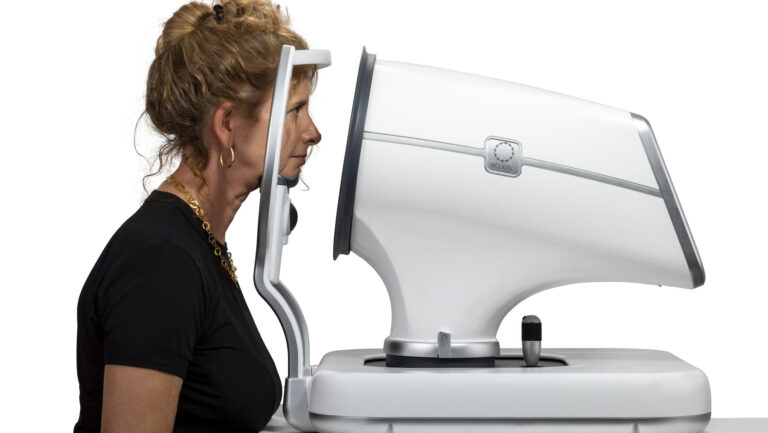
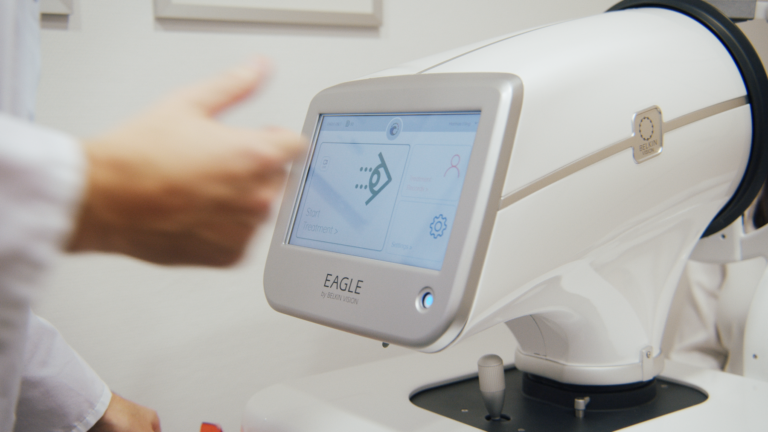
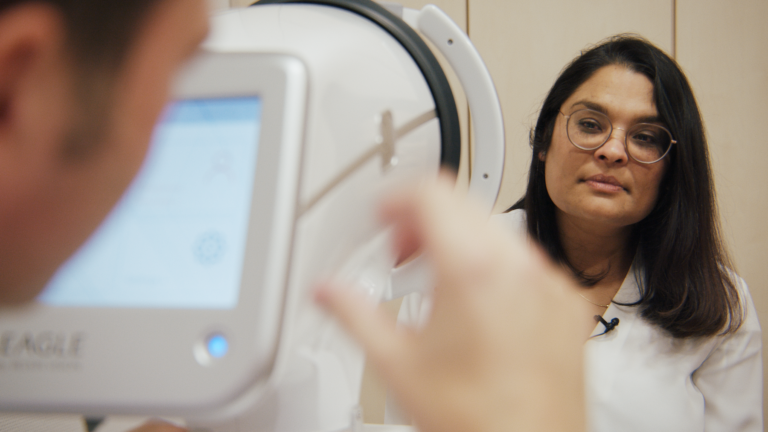
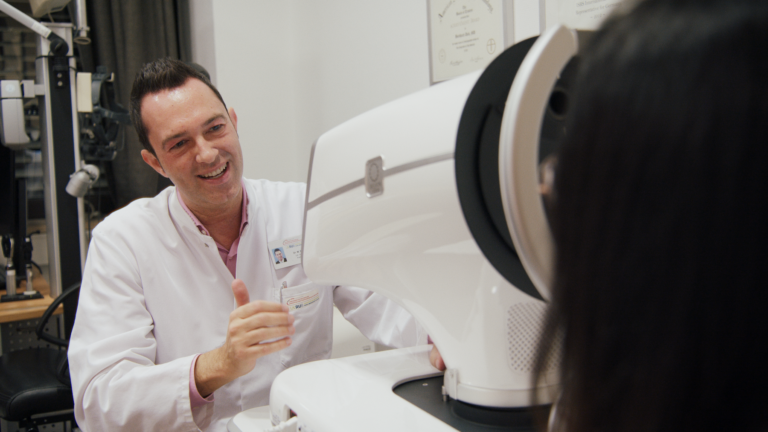
We are the first in Belgium to be able to offer our patients the Belkin ‘no-touch’ SLT laser treatment for glaucoma. According to the European glaucoma guidelines ‘Selective Laser Trabeculoplasty’ (SLT) treatment is the first choice for treating glaucoma. This brand-new ‘no-touch’ treatment is now prescribed by the glaucoma association as the preferred treatment, even ahead of the use of drops. In this painless laser treatment, the ophthalmologist does not have to touch your eyes at all.
With this laser treatment, short pulses are used to widen your tear drainage system, so that the fluid can be drained away better and your eye pressure decreases. This laser treatment is painless and usually has to be repeated after 3 to 5 years.
- Eye drops
- Microstent
- Glaucoma operation (trabeculectomy)
In this procedure, carried out under local anaesthesia with drops, a small opening is made in the white part of the eye, so that fluid can drain away. This will reduce eye pressure considerably.
How much does glaucoma treatment cost?
The cost of this treatment varies and depends on the approach selected and the seriousness of the glaucoma. During the consultation, we will explain the costs of your specific treatment. This treatment is covered by medical insurance.
Frequently Asked Questions
What is glaucoma and what causes it?
Glaucoma is a chronic, insidious eye condition in which the optic nerve gradually becomes thinner due to excessive pressure in the eye. As you get older, the balance between the production and drainage of aqueous humour can become disturbed, resulting in higher eye pressure. In Belgium, around 2% of people over 40 develop glaucoma. Without treatment, glaucoma can ultimately lead to blindness.
What are the symptoms of glaucoma and how do you recognise this condition?
In the early stages, glaucoma is completely unnoticeable: no pain, no red eye, no perceptible deterioration of vision. As a result, the condition goes unnoticed for a long time in 50 to 70% of patients. The only way to detect glaucoma in time is to have your eye pressure checked by an ophthalmologist every two years. We can only make a correct diagnosis based on several examinations combined.
When is your eye pressure too high and what are the symptoms of high eye pressure?
We speak of excessive eye pressure from 21 mmHg, with a normal value between 12 and 21 mmHg. The insidious thing about this condition is that elevated eye pressure usually gives no warning signals. You feel nothing, while the condition continues to progress in the meantime. Excessive eye pressure is the most important risk factor for glaucoma. Other factors include older age, glaucoma in the family, strong nearsightedness or farsightedness, high blood pressure and sleep apnoea.
How is glaucoma treated and can glaucoma be cured?
Glaucoma cannot be cured, but its progression can be slowed by lowering the eye pressure. At Oogcentrum Brugge we usually start with a dSLT laser treatment: a contactless laser that stimulates the drainage of aqueous humour. Only 10% of patients need a repeat treatment after 3 to 5 years. If the laser does not deliver sufficient results, we switch to eye drops or a micro-stent.
Is glaucoma hereditary and how can you prevent it?
Glaucoma does indeed have a hereditary factor. If it runs in your family, we at Oogcentrum Brugge recommend an annual check-up from the age of 40. Early detection is crucial, because once nerve fibres are damaged, they cannot be repaired. The earlier we pick up glaucoma, the greater the chance of preventing further damage.